

TECHTONICA: RIVER BIOME
The goal of the River Biome was to introduce players to Techtonica through an inviting alien environment that naturally tutorialized core gameplay features. It was designed to spark exploration, create novel factory-building challenges, and guide navigation using color and clear point-of-interest indicators. Each biome featured a distinct environmental obstacle for players to overcome and utilize as their factory grew; here, the river blocked digging and building, but could later be harnessed for energy with the right upgrades.
I led visual development for the biome, collaborating with the Art Director and Design team to establish cave layout logic and voxel cave-creation techniques. My work spanned reference boards, thumbnails, and concept art through to modeling and texturing production assets. I also painted in-engine key art for major narrative moments to establish foliage and rock populations, color schemes, material definitions, and lighting targets.
Software: Blender, ZBrush, Unity, Photoshop, Substance Painter, Substance Designer
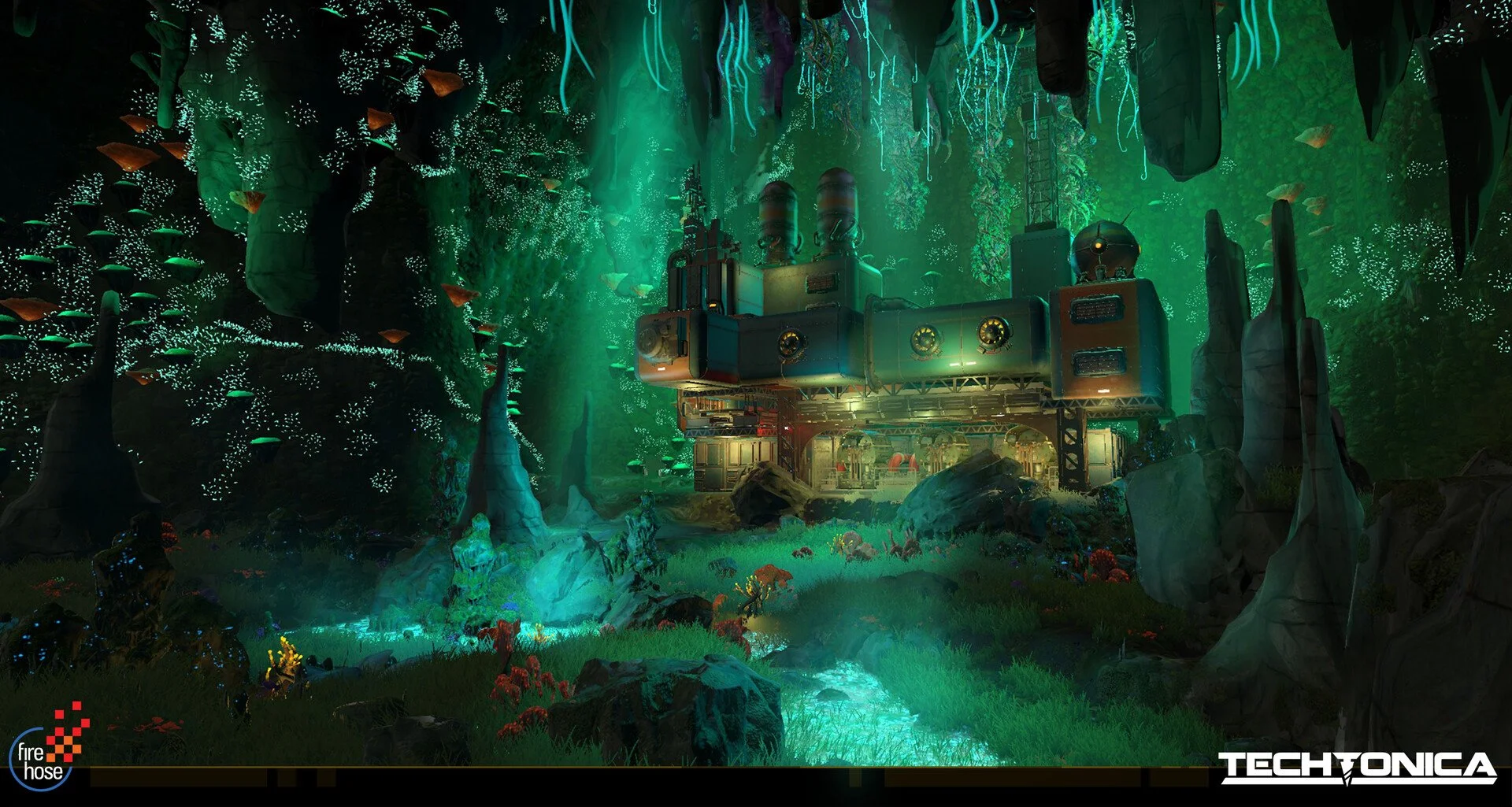
PT-Xray, River Biome. In Engine (Unity) Concept Art-Techtonica
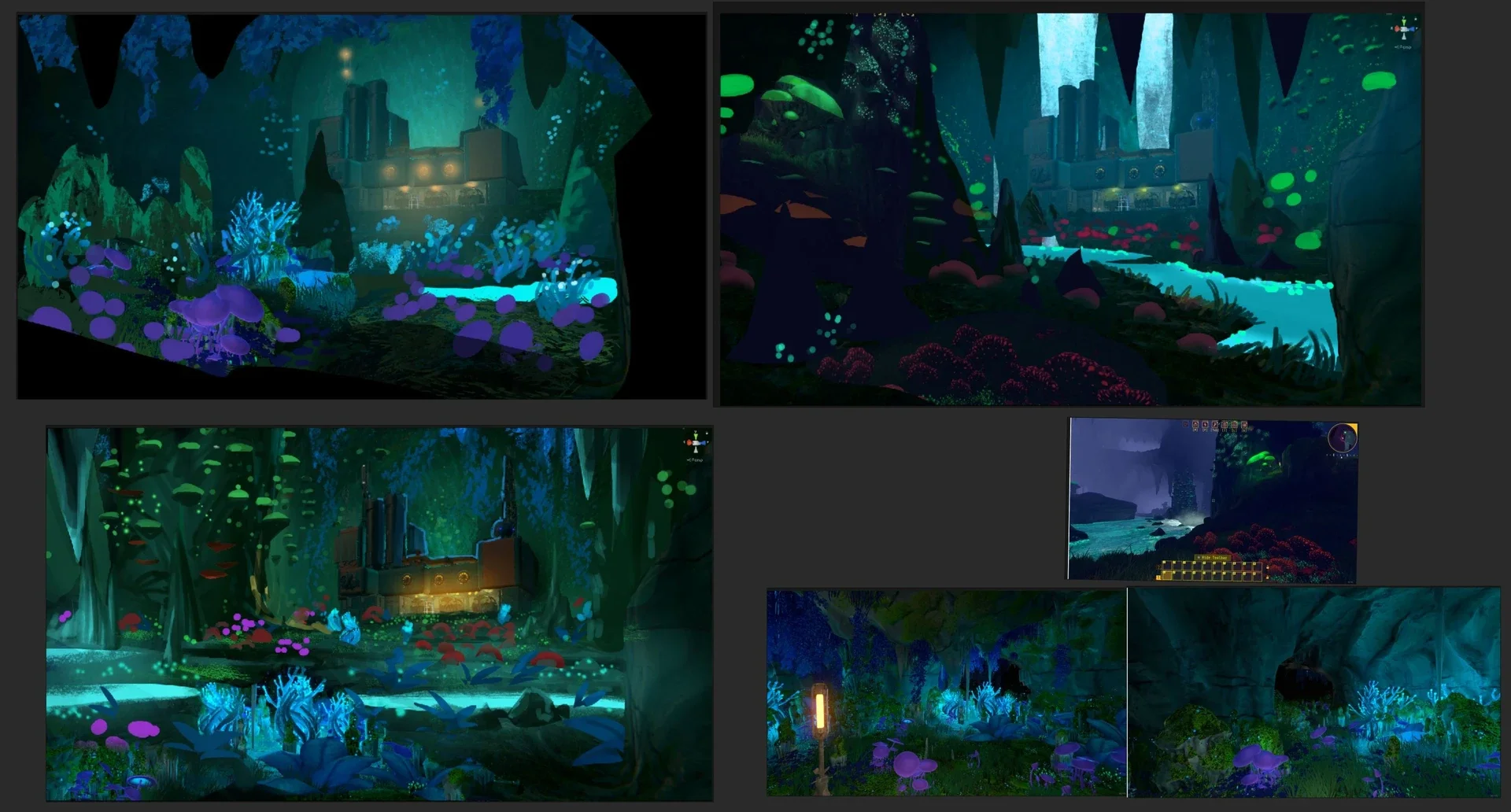
PT-Xray, River Biome. Concept Thumbnails - Techtonica
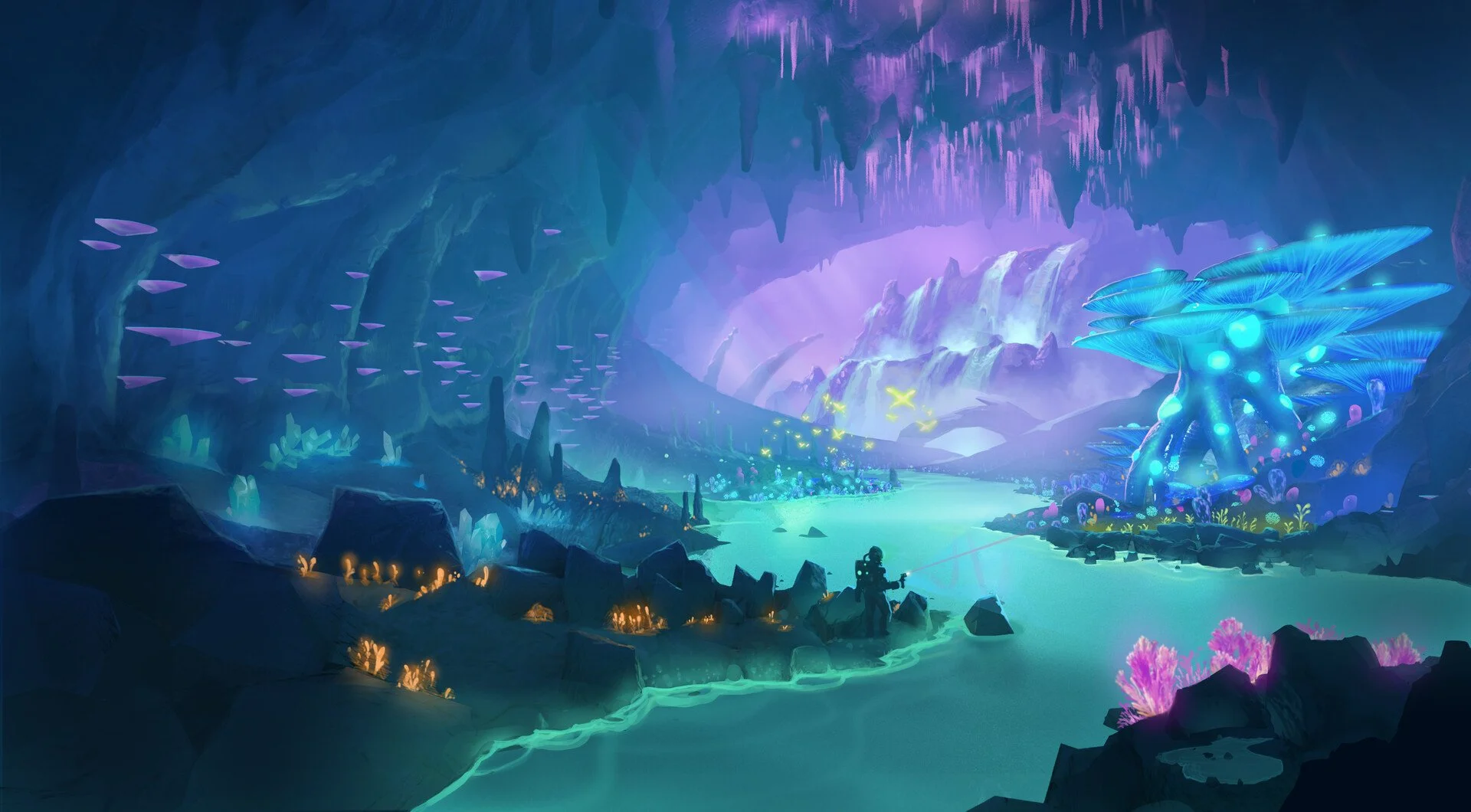
Bioluminescent Cave Pre-Production Art for Pitch Deck-Techtonica
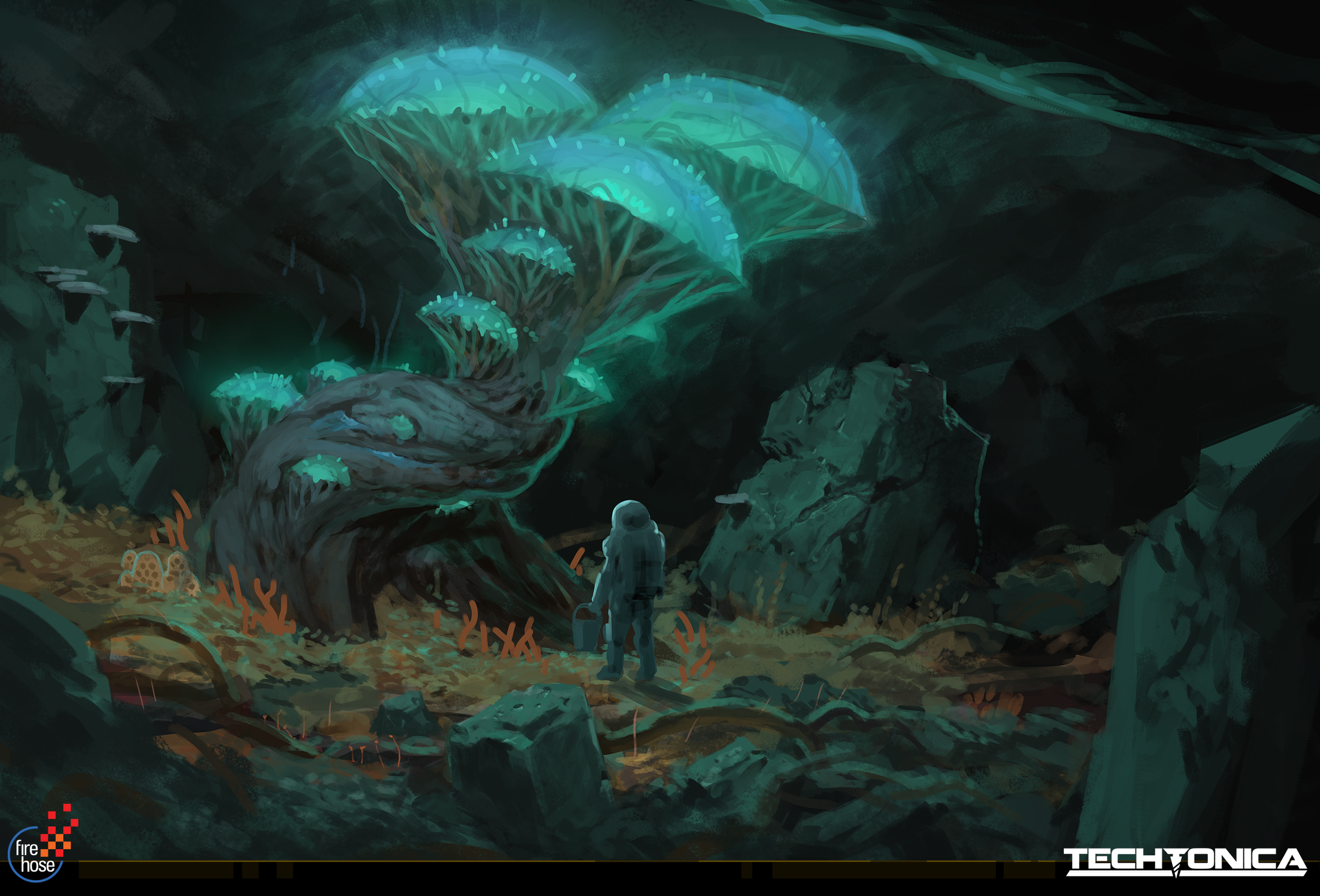
POI Alien Tree Concept Art-Techtonica
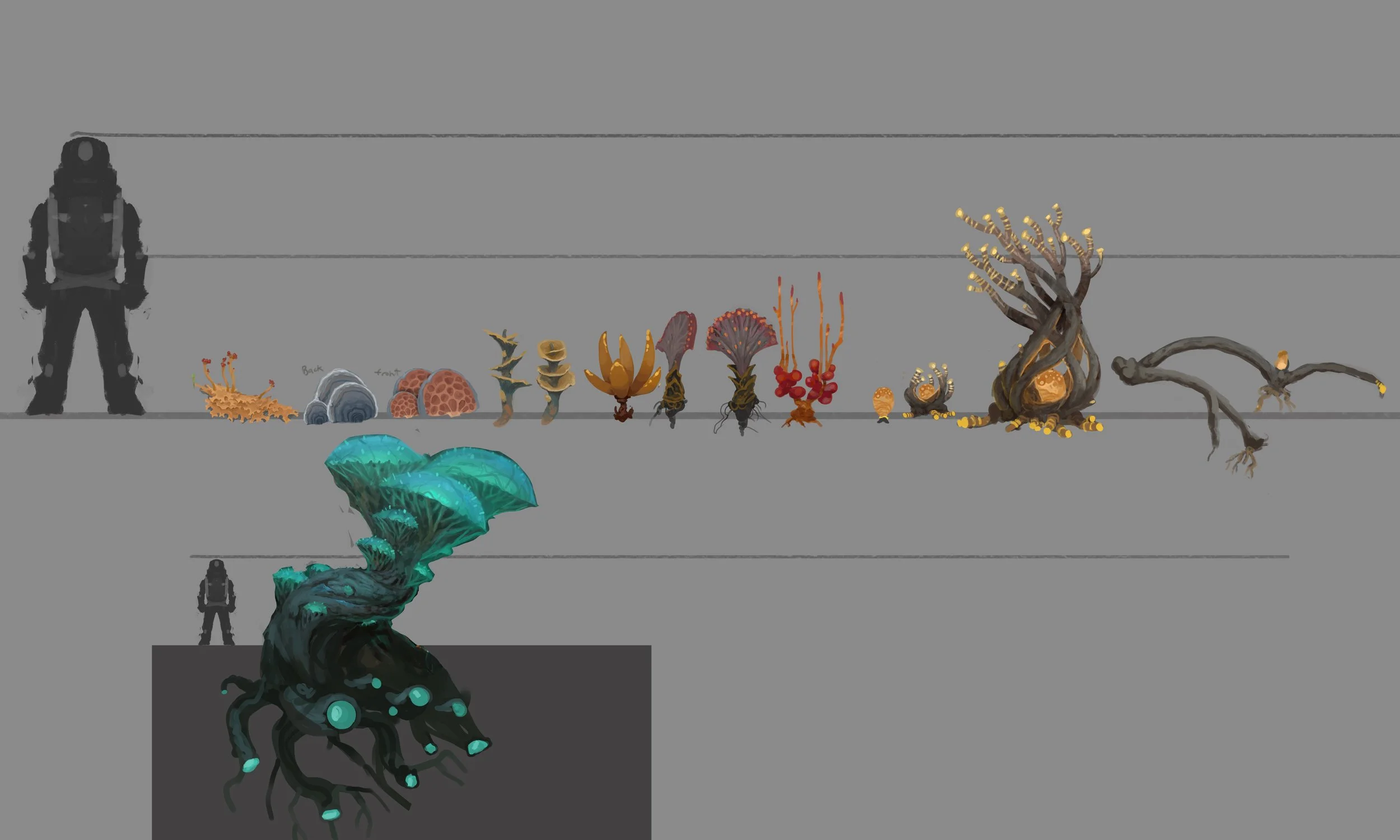
Alien Plant Scale Reference for River Biome -Techtonica
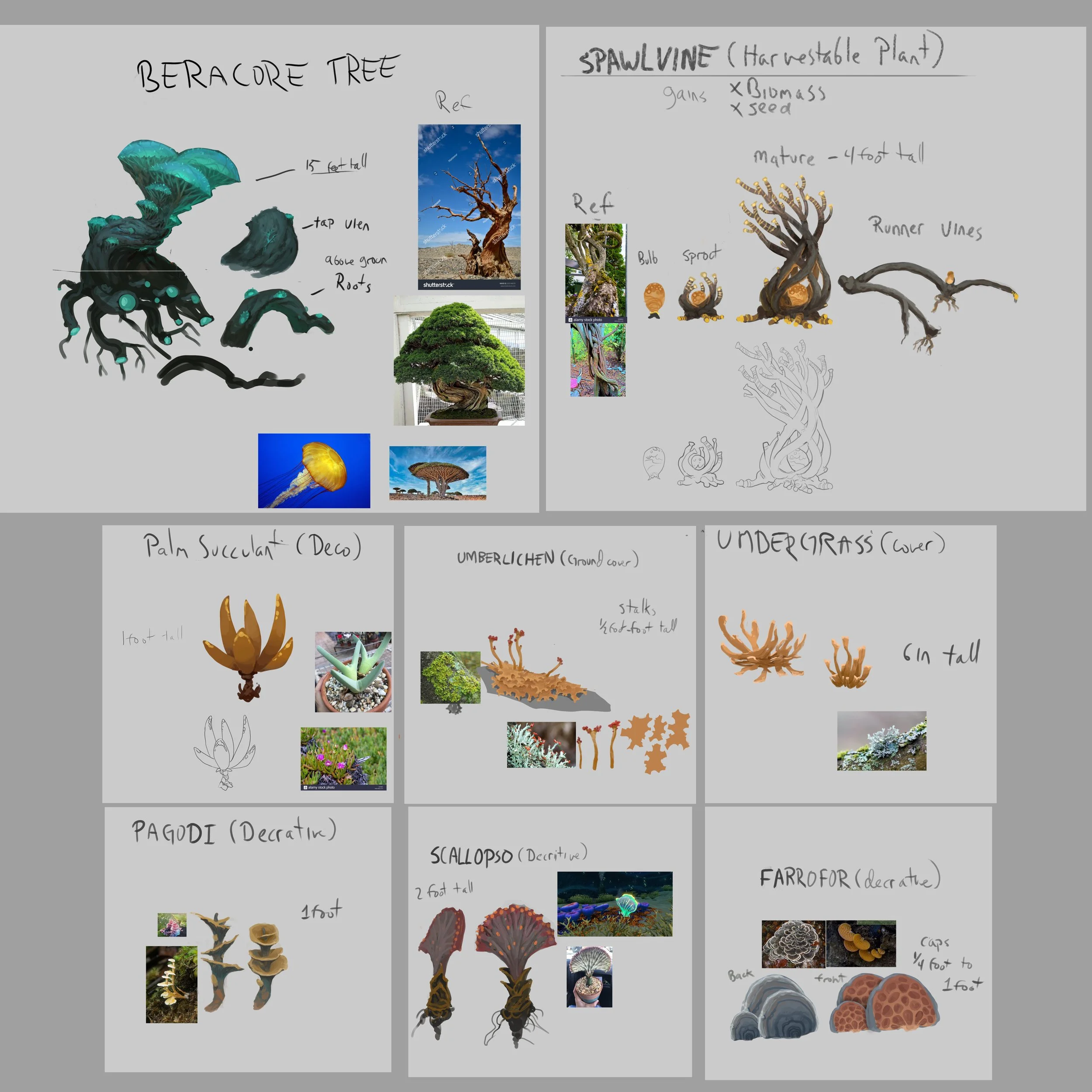
Various Alien Plant Concepts for River Biome-Techtonica

River Biome Seamless Materials Designed and Authored in Substance Designer-Techtonica
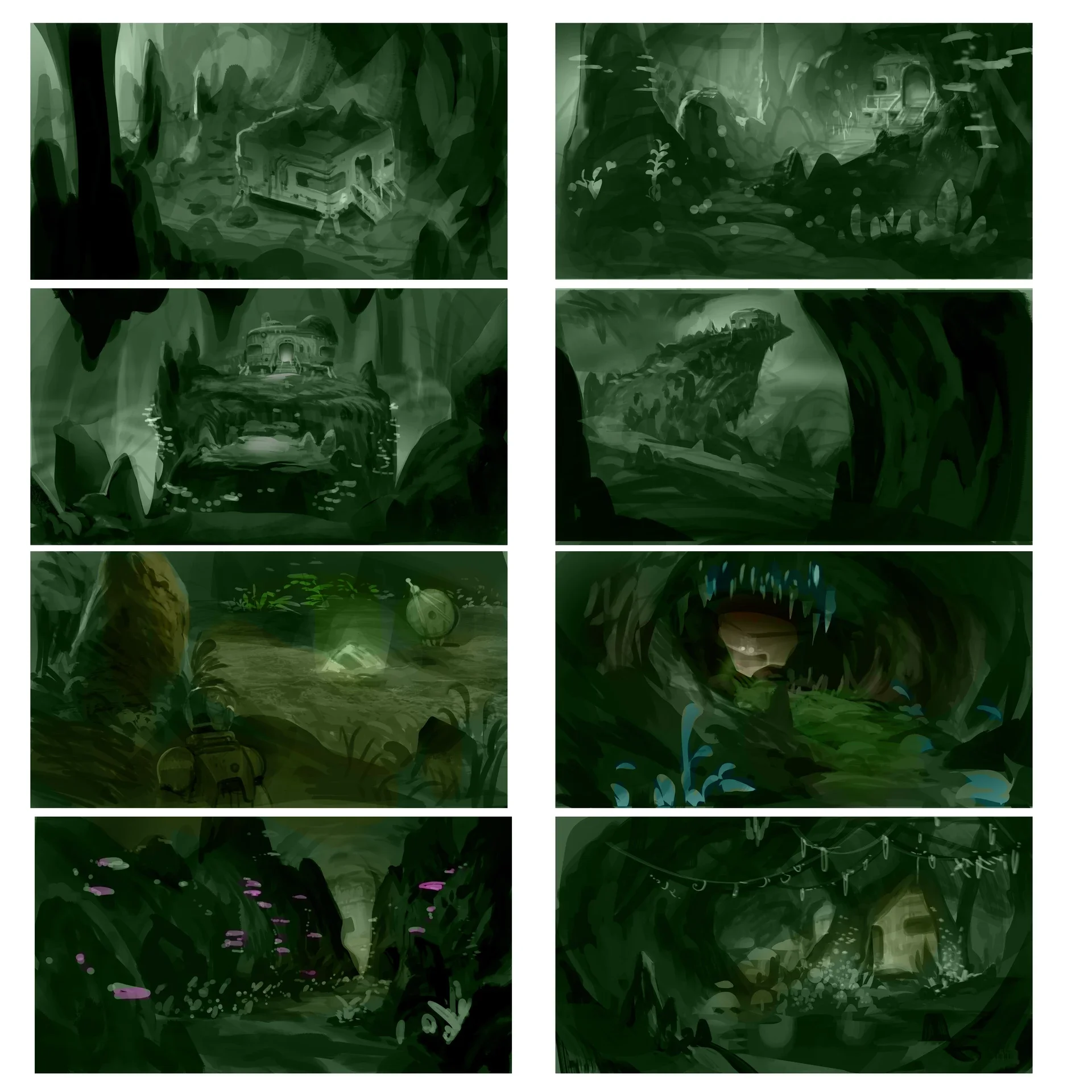
Pre-production Cave Thumbnails. Discovering Derelict Bases-Techtonica
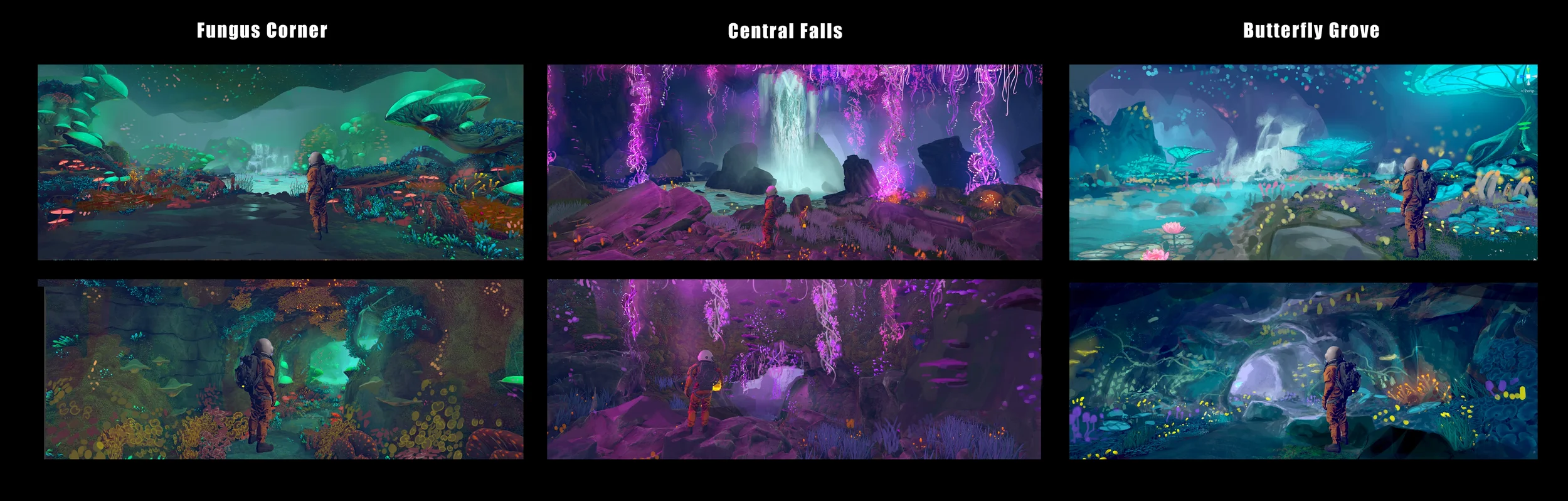
In-Engine Sub-Biomes Concept Art of the River Biome
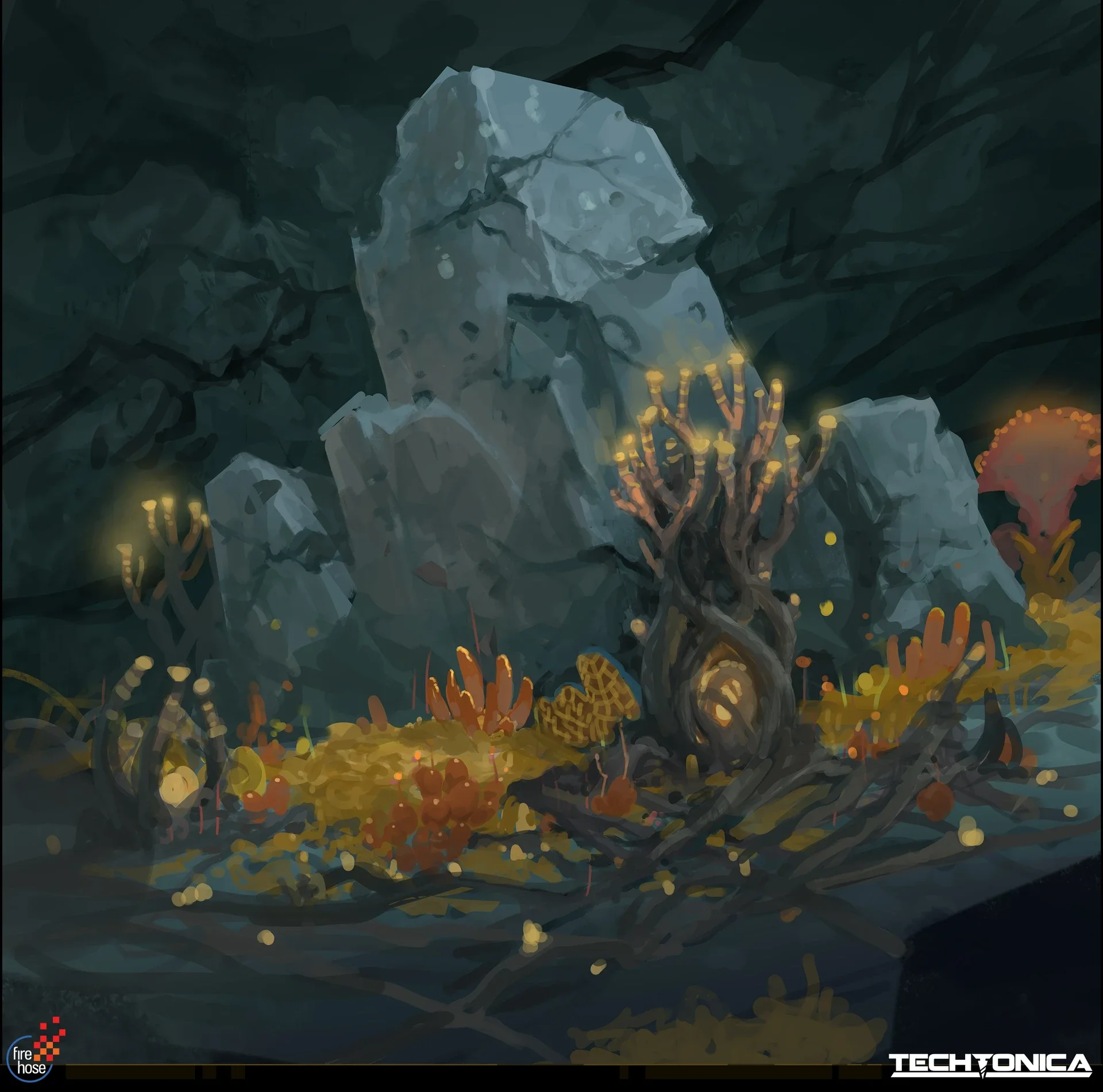
Plant Grouping Concept for River Biome-Techtonica
TECHTONICA: DESERT BIOME
The Desert Biome was the second biome, created to feel far more hostile and inhospitable to the player. Its color palette of oranges, reds, and purples with yellow accents established a harsher, more alien atmosphere. The primary environmental obstacle was vast sand seas that slowed movement and prevented building, forcing players to traverse between large rocky islands to construct and connect their factories while harnessing wind currents and avoiding sandstorms.
I led visual development for the biome, designing everything from the sand and rocky islands to texture treatments that evoked a windswept landscape. I also designed flora ranging from grounded bioluminescent species to bizarre landmarks like the Jelly Cactus, an enormous alien cactus living in the open dunes that shoots spores into the air along wind paths, giving players visual cues to strategically plan their factory routes.
While the final shipped game featured a more streamlined sand mechanic, these concepts established the core visual direction for the biome's color palette and material treatments.
Software: Blender, ZBrush, Substance Painter, Substance Designer, Photoshop
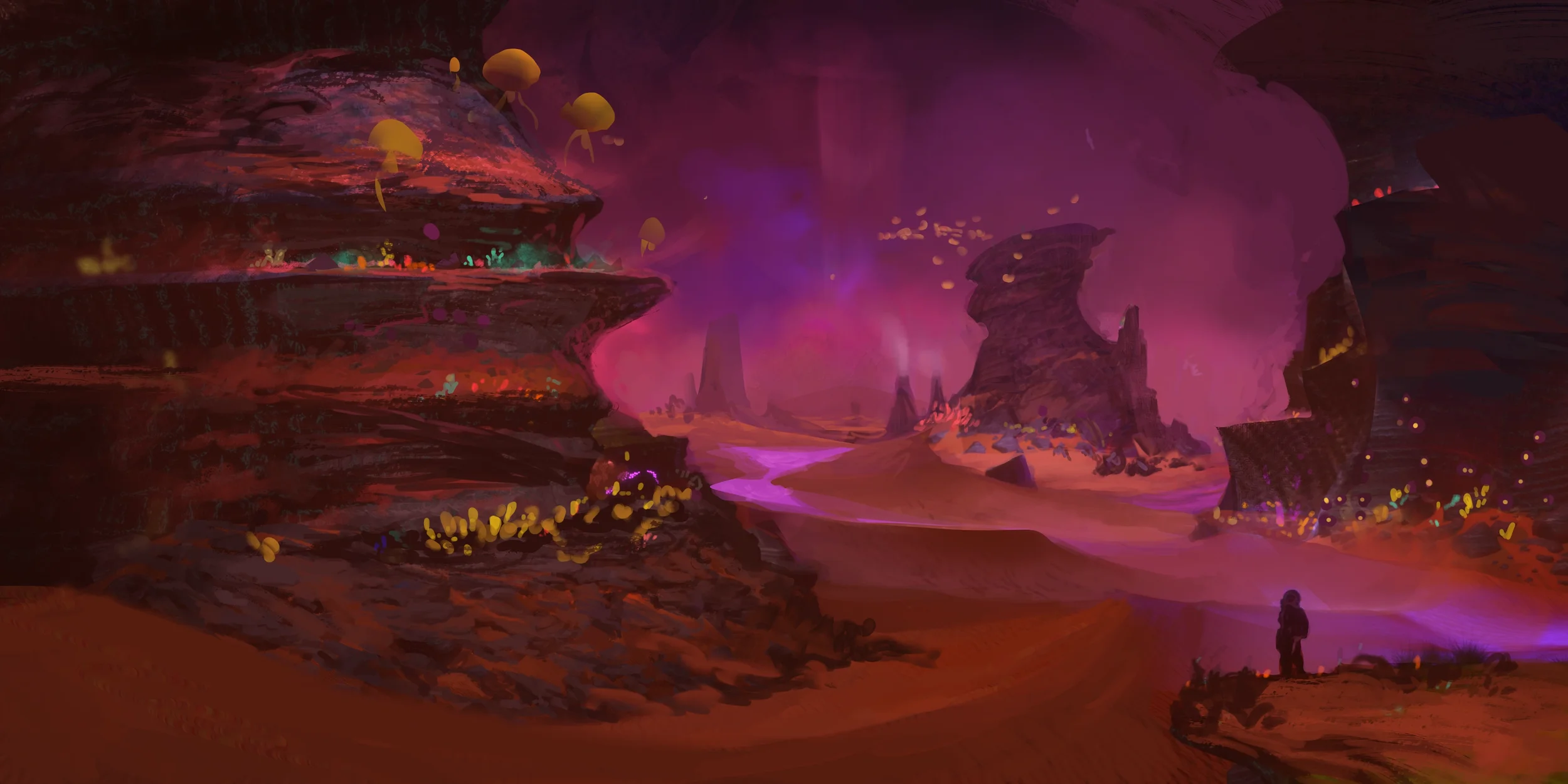
Desert Sea and Rock Islands, Desert Biome Concept-Techtonica
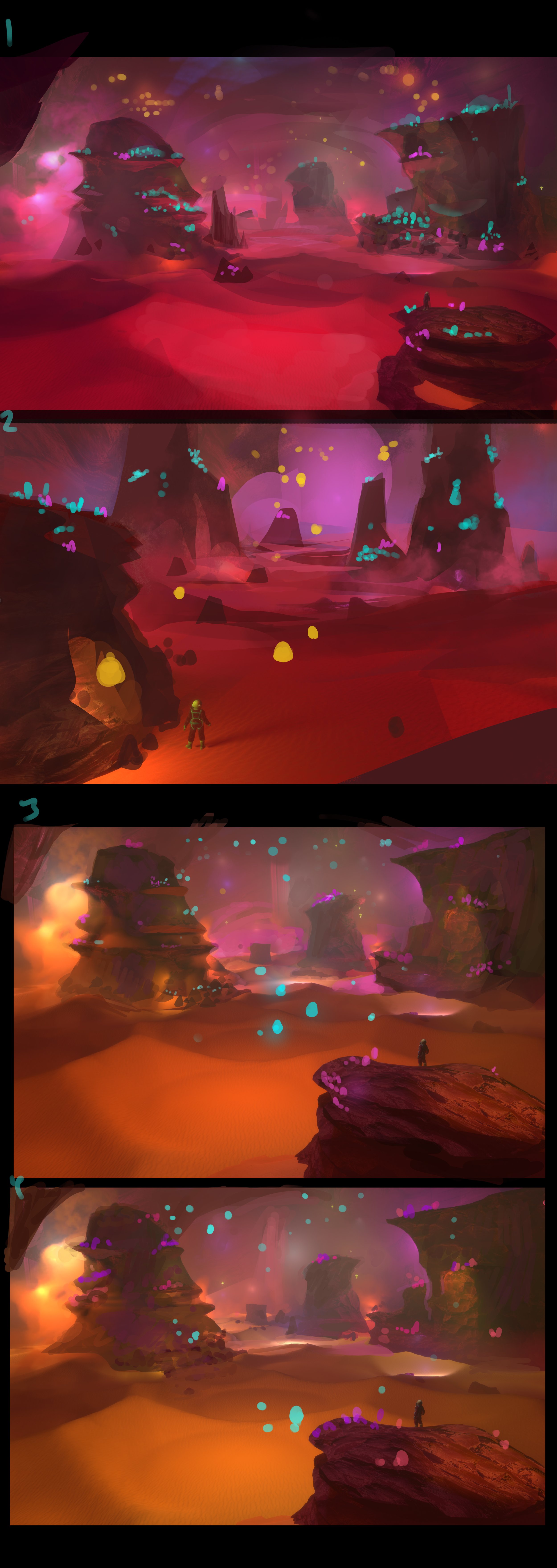
Color Variation Thumbnails, Desert Biome- Techtonica
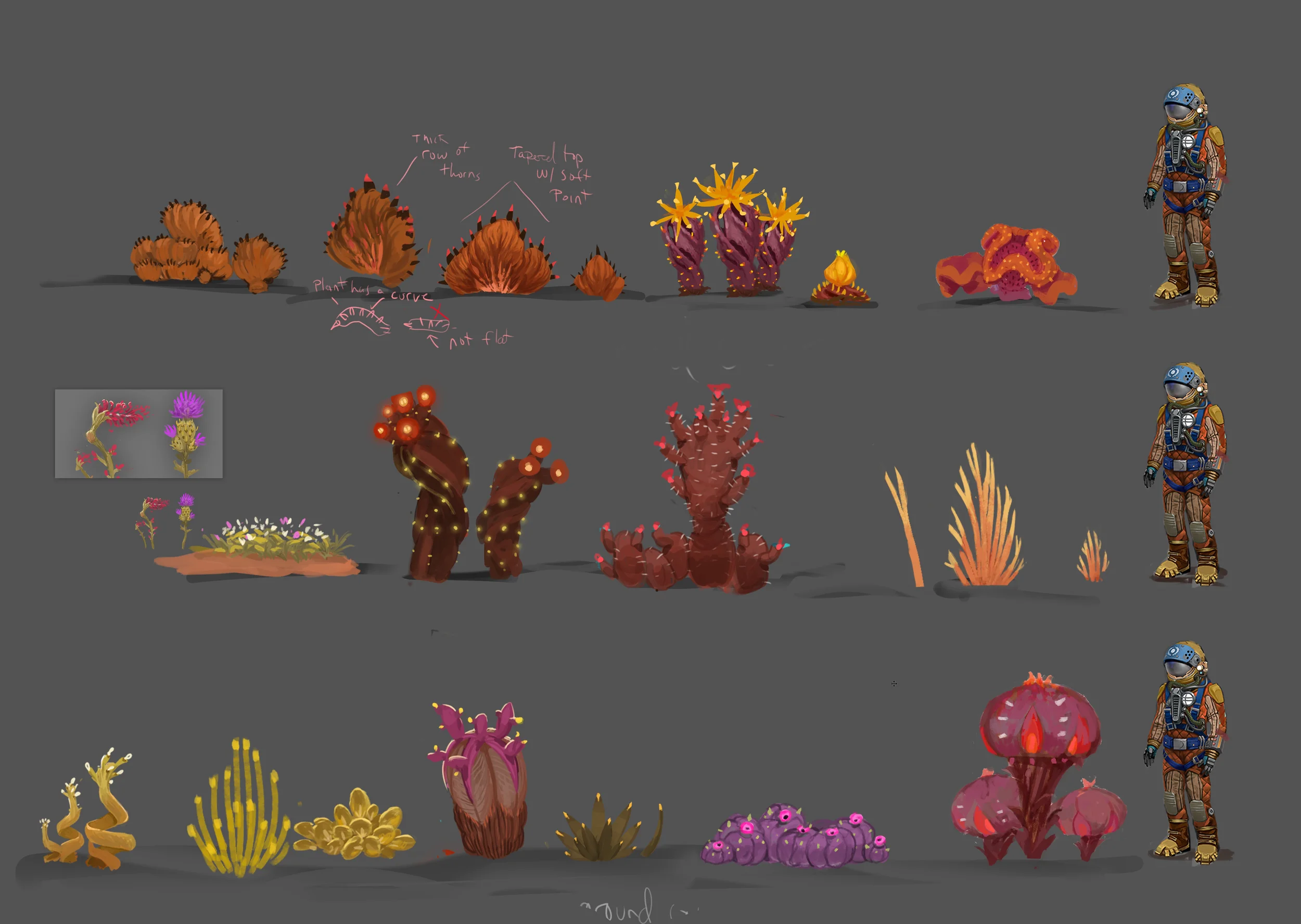
Ground Cover Plant Concept, Desert Biome-Techtonica
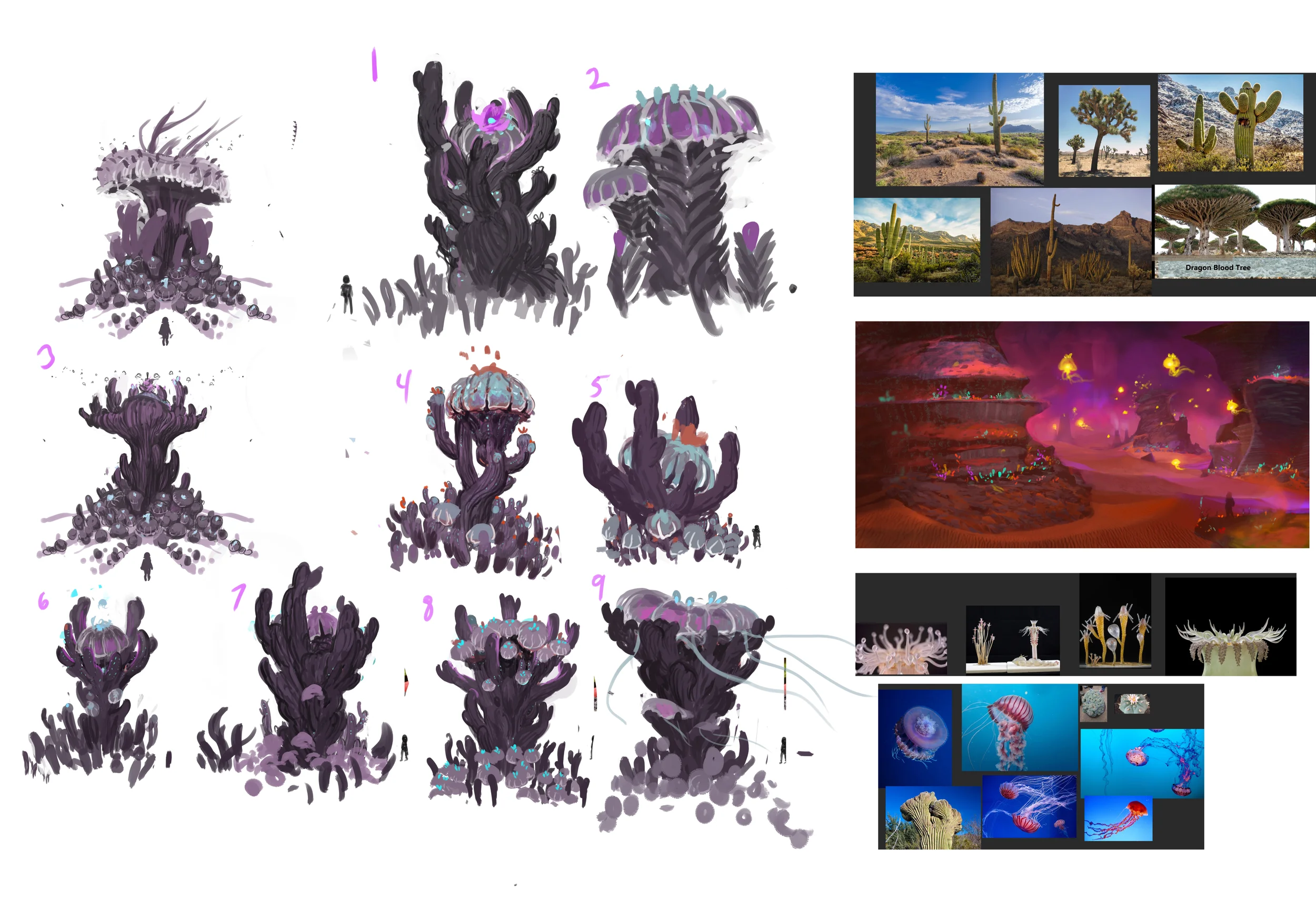
POI Jelly Cactus Concept Variations, Desert Biome-Techtonica
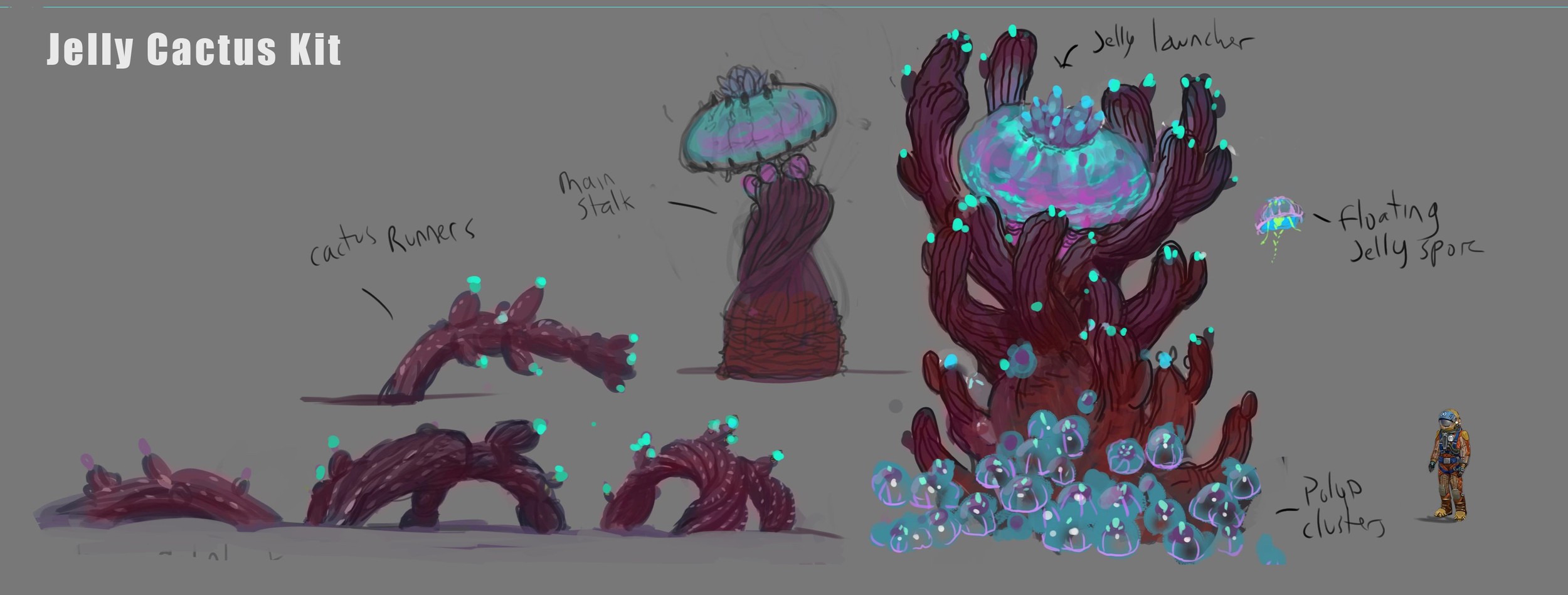
POI Jelly Cactus Concept Kit, Desert Biome-Techtonica
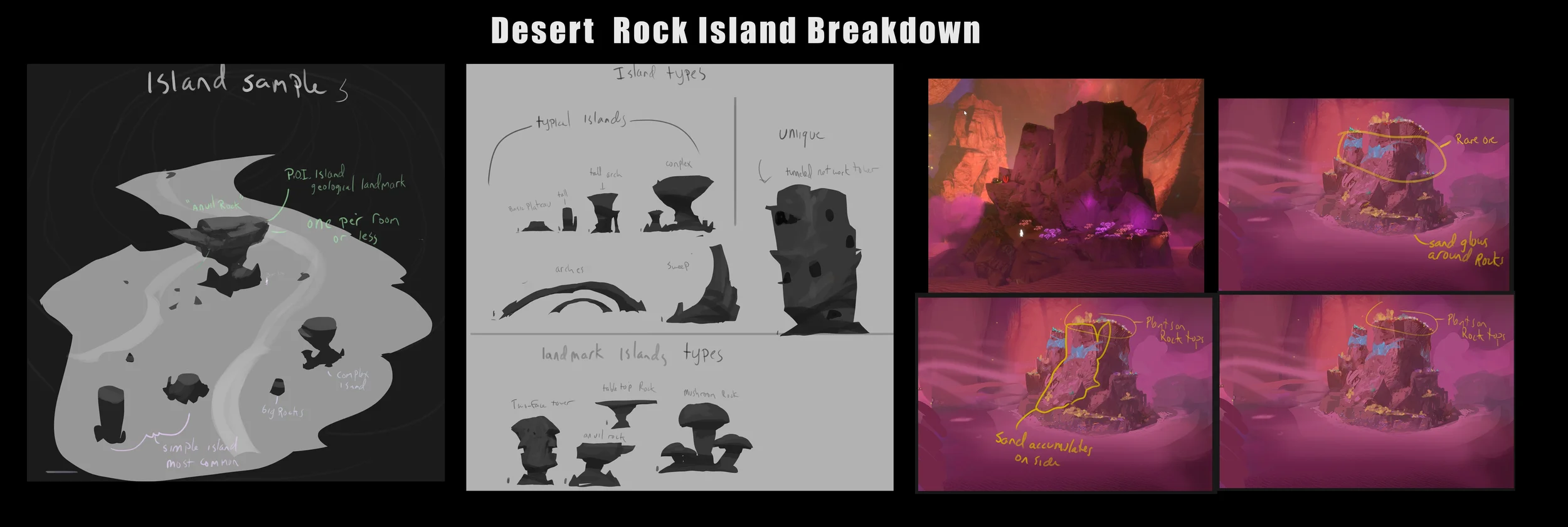
Rock Outcropping Logic, Desert Biome -Techtonica
Deep Water Ocean Lab: Personal Project
A personal project focused on developing hard-surface modular workflows in Unreal Engine 5 as part of a mentorship with Nate Stephens. I was responsible for all phases of this environment, from concept art and greybox blockout through high- and low-poly modeling, texturing, material creation, and lighting.
Software: Unreal Engine 5, Blender, ZBrush, Substance Painter, Substance Designer, Photosho
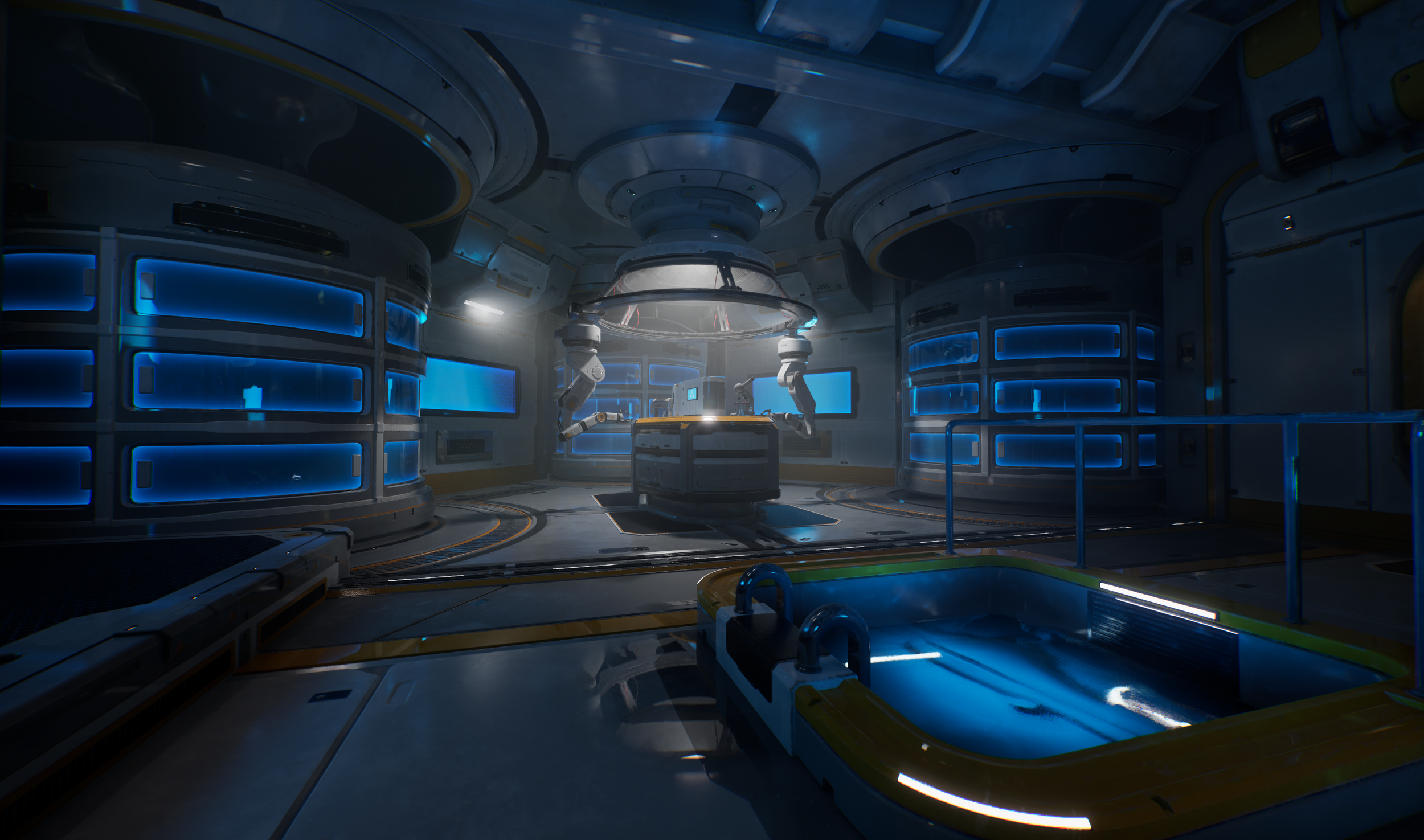
Lab Environment Created in Unreal Engine, Personal Project
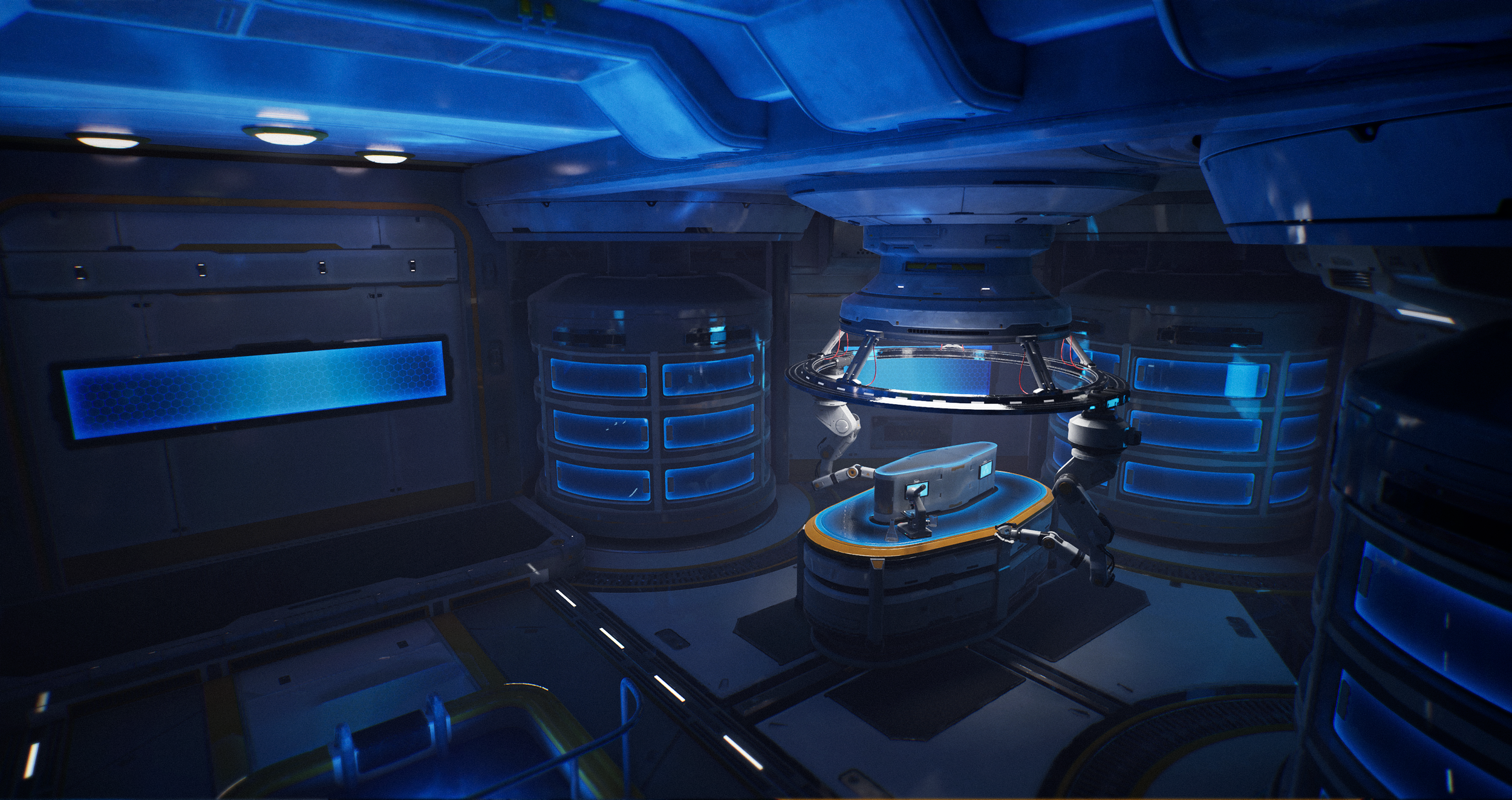
Lab Environment Created in Unreal Engine, Personal Project
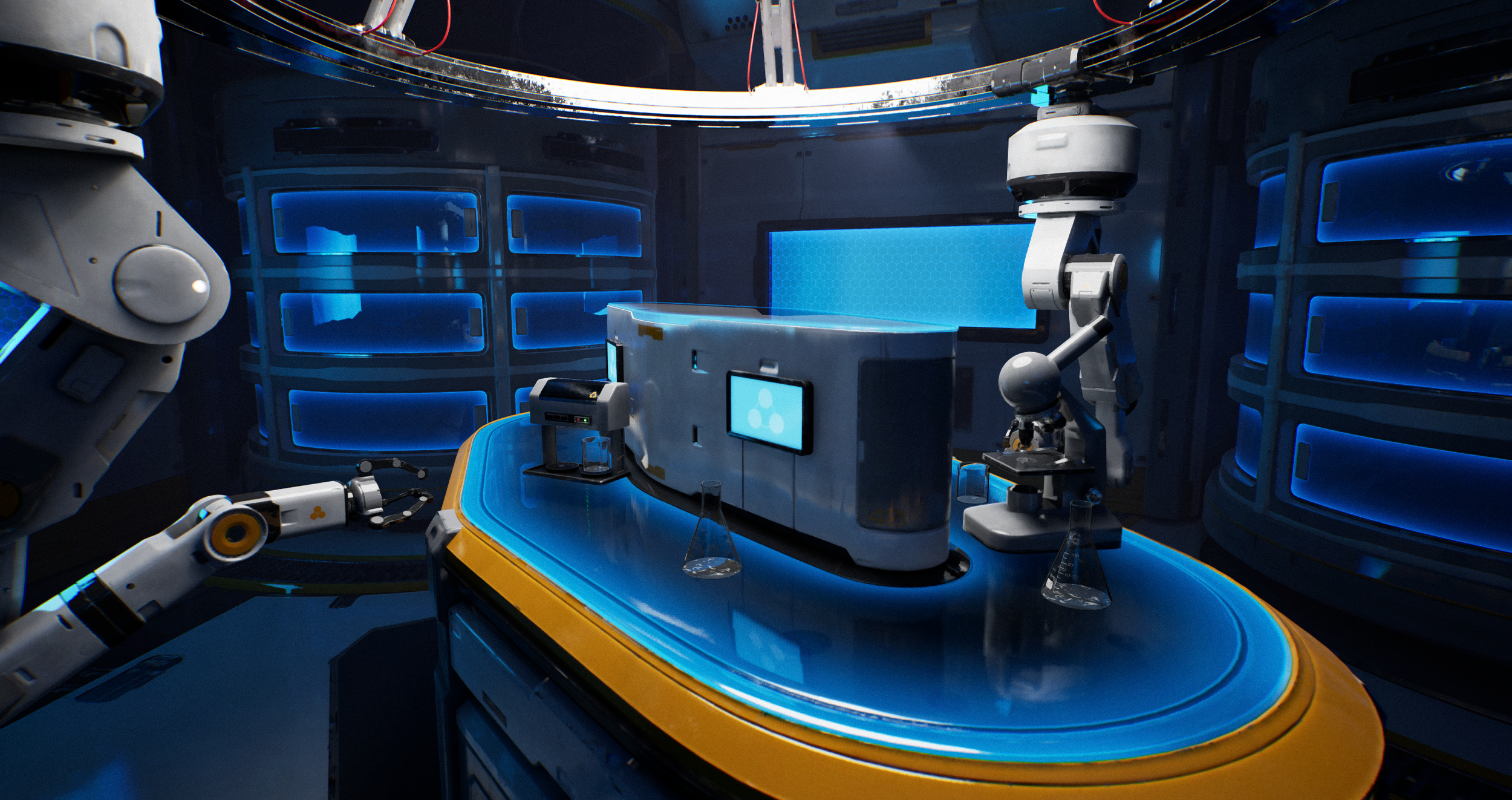
Lab Environment Created in Unreal Engine, Personal Project
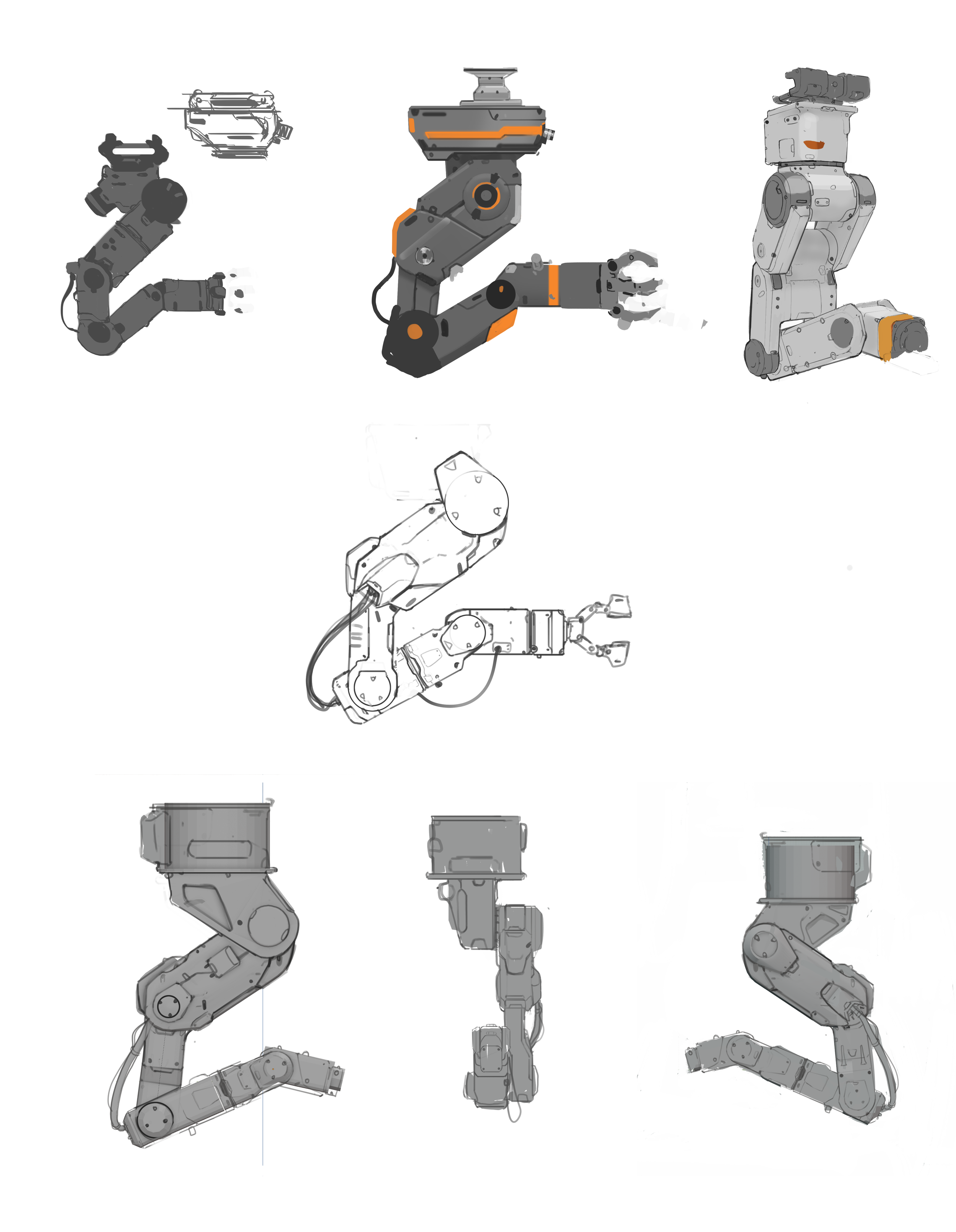
Robotic Arm Concept Iteration for Lab Environment, Personal Project
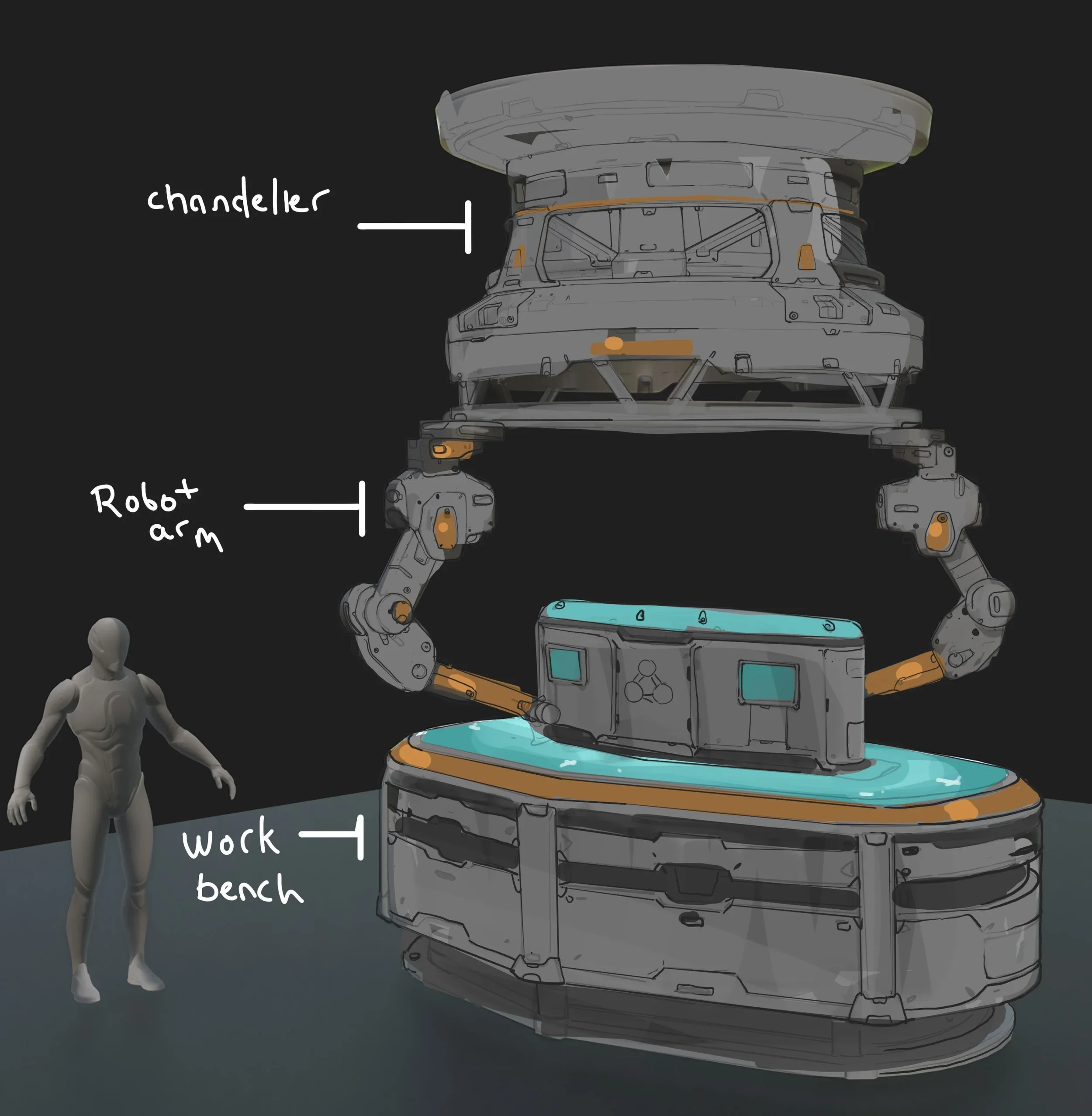
Work Bench and Robotic Arm for Lab Environment, Personal Project
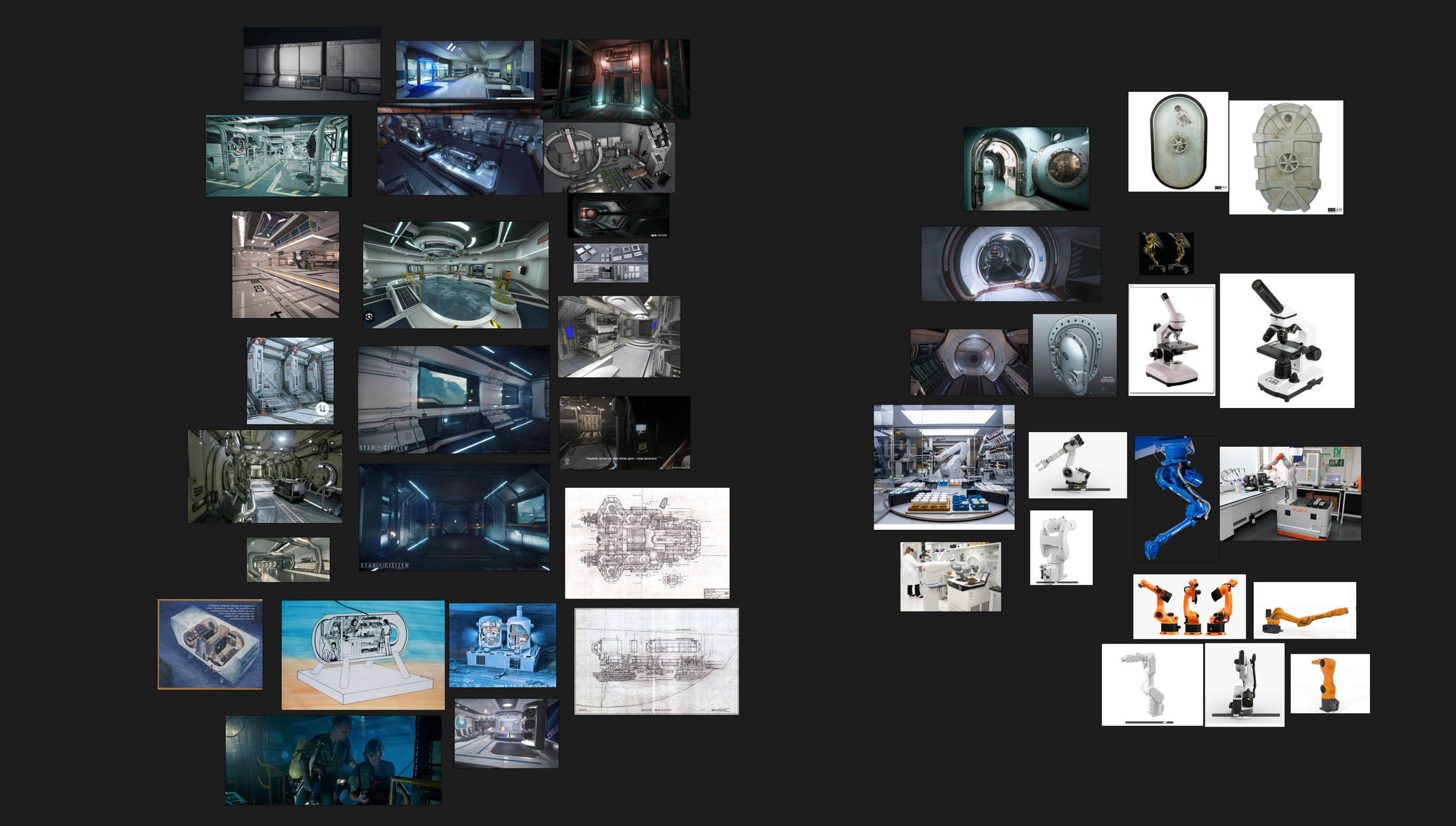
Reference Sheet for Lab Environment, Personal Project